The Owen Barfield Literary Estate Blog

Owen Barfield and the Mystery of the Word

In his lectures, Rudolf Steiner spoke on a number of occasions about the enactment of a decree at the 8th Ecumenical Council in Constantinople in the year 869 – in defiance of the view of the Eastern Church, represented by Patriarch Photius – to the effect that man does not have a spirit but only a soul with certain spiritual attributes. Steiner adds that the Catholic Church has done its best to instil this notion in the minds of those belonging to Western Christendom, thus in his view laying the foundations for the Scientific Revolution and the materialistic paradigm.


Continue Reading
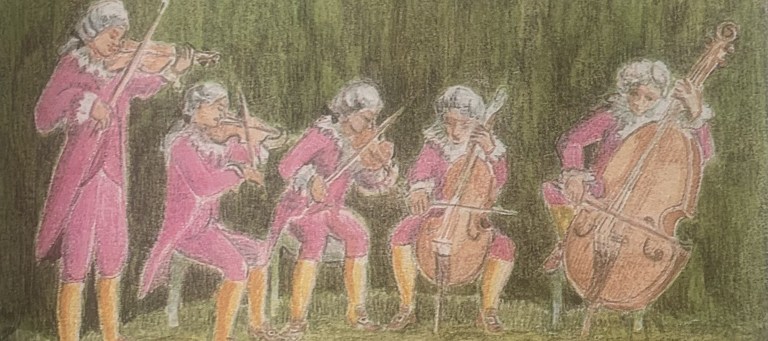
For Christmas: The Silver Trumpet on its 100th Anniversary

In November 2024, I wrote on this blog about what was then the planned publication in 2025 of a new edition of Owen Barfield’s fairy-tale, The Silver Trumpet. Specifically I noted that it would be published by the Barfield Press on the 100th anniversary of its first publication. That gave rise, as I wrote, to a particular curiosity:

I had been wondering recently precisely when in 1925 the book was published by Faber & Gwyer, the predecessor of the publishing house still in existence, Faber & Faber.


Continue Reading

The Music That Shapes the Soul: Owen Barfield, Original Participation, and the Future of Education

I’m incredibly fortunate to be a piano teacher and music composition instructor to students of all ages a few days each week. I also perform, compose, create content for YouTube, and write music education books. My time is spent nurturing the imagination. As Samuel Taylor Coleridge beautifully put it, “The primary Imagination I hold to be … a repetition in the finite mind of the eternal act of creation in the infinite I AM.”

It’s quite common for younger students to study with me, in some cases because of the decline of music in schools and the lack of imagination in the curriculum.


Continue Reading

Barfield news: O.B. Symposium in London, November 2025, Rediscovery of Meaning reading group, and a Silver Trumpet review

It is fair to say that there is a feeling of activity and liveliness with everything that touches on Owen Barfield at the moment. Maybe what will turn out to be important in this in the long run is the connections that may be formed between people interested in Barfield’s writing and thinking about thinking. That is not at all to say that the thinking merely underwrites the forming of communities and the friendships that may happen. Rather it is to bring home that the final participation Barfield sought is not finally a private matter for individuals.


Continue Reading

Haunted by Heidegger

We are haunted by Martin Heidegger. Even if you’ve never read a word of his dense philosophical texts, his ghost walks beside you, shaping how you imagine your place in the world. His spectral influence permeates our modern consciousness, guiding how we understand our relationship to reality, technology, and meaning itself. Heidegger’s philosophical project emerged as a desperate attempt to resolve the existential crisis that had been brewing in Western thought explicitly since the Romantic era—a crisis most eloquently articulated by Samuel Taylor Coleridge, who recognised the growing chasm between subjective experience and the objective world.


Continue Reading

Silver Trumpet new edition round-up: a date for your diary, a review and a request for help

We hope those who have got a copy of the new edition of The Silver Trumpet in the two months have enjoyed reading it, or are enjoying it.

This post is a brief one, by way of information, of news after the new edition’s publication.

Online Event

Whether you have read The Silver Trumpet or not, you may be interested in an online event being held next month by the Inkling Folk Fellowship, details as follows.

  • Topic: Owen Barfield‘s The Silver Trumpet (in Honor of its Republication), with Landon Loftin and Edwin Woodruff-Tait
  • Date and Time: Friday 8th August, 2025.

Continue Reading

The new edition of The Silver Trumpet is out now!

The new edition of The Silver Trumpet has now been published!

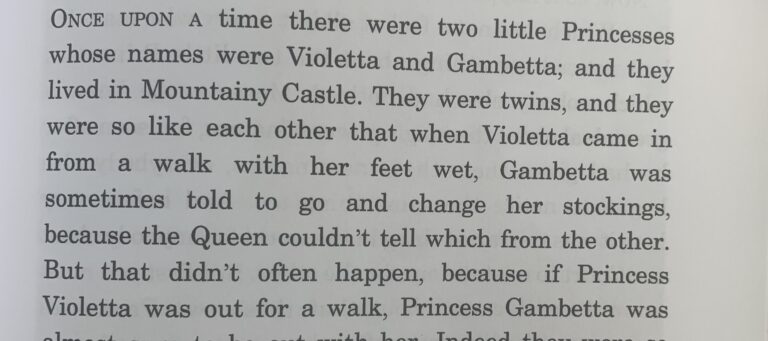
It is a delight for the Barfield Press to publish this tale, the first work of fantasy by the group of writers that came to be known as the Inklings, on the centenary of its first publication in 1925.

The blurb is as follows:

The Silver Trumpet was the first children’s fantasy story to be published by one of the Inklings. Its early success with the children of Barfield’s friend and fellow Inkling, J.R.R.

Continue Reading

Owen Barfield’s Reception of The Abolition of Man by C. S. Lewis

Owen Barfield, whom C. S. Lewis described archetypally as his “Second Friend” – “the man who disagrees with you about everything […] not so much the alter ego as the antiself” – on a number of occasions expressed his agreement with the argument of The Abolition of Man, and his admiration of the book. For example, describing various means by which one can become aware of the presuppositions of one’s thoughts, Barfield once wrote:

One, of which the best example I know is C.


Continue Reading

The Owen Barfield in Russian Club

The Owen Barfield in Russian Club is now ten years old. From the very beginning, we called it a club, although it could be called a “circle” or a “society”, or have no special designation at all, like the Inklings, who are sometimes named an “informal literary group”, though none of them ever thought of it in these terms while it was active. However, our group, brought together by an interest in the works of one single author, Owen Barfield, became a club.


Continue Reading

Reflections on a Passage from “Meaning, Revelation and Tradition in Language and Religion”

The following contains some thoughts inspired by a very striking passage in Barfield’s late essay “Meaning, Revelation and Tradition in Language and Religion.” In reflecting on the Incarnation, he considers what it would mean for a divine-human person to speak. He suggests that—while an ordinary human child, in beginning to speak, is bound by the limitations of human memory (and, it is implied, by a language into which they are born, with its sedimented history of meaning)—Christ was either not limited in this way, or the limitation was “voluntarily accepted.”


Continue Reading