A transcript of a talk given by Simon Blaxland-de Lange on 30th March 2025 during the marking of the centenary of Rudolf Steiner’s death at Rudolf Steiner House, London.
It is a symptom of the present condition of earthly humanity that many people would say that one cannot realistically speak of something such as “world culture”. Quite apart from the inherent problems of trying to define any kind of global phenomenon with a single differentiated, localised idea, the very notion of “culture” (other than as a memory or reflection of former times) is often called into question or used synonymously to refer merely to entertainment. We are, in short, experiencing a crisis of meaning. Only the other day I read a feature article in a newspaper where respondents were asked to indicate in what way they could find meaning in life; and the majority of the most creative answers centred around the endeavour to alleviate sorrow and mental illness through love. But meaning, a sense that there’s some point in this human existence of ours? This did not really feature at all.
This relative sense of meaninglessness and futility that is so widespread today, even leading so many especially young people to suicide, has its origin in an extreme development of the “Hamlet” consciousness of modern times, where the ostensible division between separate selfhood and the world has developed to the point where the world of physical, earthly reality (including one’s fellow human beings) cannot ultimately be known but only exploited. Moreover, the assumptions underlying this experience have been further cemented in modern times by the “scientific” conjecture that what we experience as our isolated individual self – together with the whole of non-sense perceptible reality – does not exist. Thus, as Owen Barfield puts it in his book Poetic Diction (1928), “the purely empirical knowledge which in our time has arrogated to itself the name of science treats nature as an invading army treats an occupied country, mixing as little as possible with the inhabitants”.[1]
This reference to “nature” and to our unrelenting exploitation of it then in turn highlights the other aspect of our modern dilemma which virtually everyone is in one degree or another aware of as the so-called “climate crisis”, the realisation that the effect of human activities is such that the natural world will most likely be unable to support human existence unless some dramatic changes are made (there may be some disagreements about the diagnosis, but the situation is nevertheless broadly as described). People then look in vain to politicians or to those with financial or commercial influence, but – as again to quote Owen Barfield, this time from his lecture entitled “Two Kinds of Forgetting” (1981)[2] – the assumptions which underlie the way we perceive and experience the world work so deeply into the sub-conscious that “neither the proponents of holism nor the ecologists with their healthy impulse to integrate man once more into the surrounding world of nature seem able to take the only way that can lead to a truly intimate knowledge or a truly organic integration”. And this, he goes on to say, requires that we “realise that, just as our skin-bound physical frame is a member of the spatial world of bodies and things, so our seemingly isolated little spark of self-consciousness [deemed, as noted above, not to exist by science] is a member of a greater world of spirit and of spirits, to which that other world owes its existence in the first place”.[3]
I have so far dwelt upon the wider context of the cultural impulse that Rudolf Steiner brought to the world because it is otherwise very difficult to appreciate the revolutionary nature of his understanding of thinking, or epistemological enquiry, as a theory of knowledge, as expressed through his book The Philosophy of Freedom or The Philosophy of Spiritual Activity, which as we know formed the philosophical basis for everything that he subsequently brought in terms of anthroposophy. This also helps us to understand why Rudolf Steiner has been so studiously ignored, not least in those academic circles where the theories of such as Bacon, Descartes, Lyell and Darwin, together with the assumptions associated with them, are so ingrained. In preparing this brief contribution I have not only delved into the work of Barfield, arguably the greatest of all interpreters of Rudolf Steiner in the English language, but also into Andrew Welburn’s excellent book Rudolf Steiner’s Philosophy and the Crisis of Contemporary Thought[4]; and it will be helpful to quote a couple of short passages which place what Barfield discerned in Steiner in a more contemporary context and well juxtapose the twin philosophical and moral dilemmas of our time:
So long as we continue to think in the ways that have brought us to the brink of ecological disaster – thinking in terms of manipulation, detachment, looking-on from outside – we can do no more than tinker with issues that really demand a radical approach. Yet few thinkers have gone very far toward a reappraisal of the kind which Rudolf Steiner made. The scientists fear that there can be no real knowledge if we turn our backs on “objectivity”, and are dubious of the complexities that go with knowledge from within; the moralists share the evaluation of knowledge as cold and alien to compassion, and seek some overriding imperative or restraining order on the progress of science (p. 11).
And then, in very plain words, Welburn shows how this is translated into a kind of knowing about the world which is also a path of moral activity: “For him [Rudolf Steiner] our knowledge and our moral freedom are from the outset intimately connected, and so for Steiner all knowledge bears a moral significance, and our relationship to the world as knowers (traditionally a somewhat academic topic) is already in the strictest sense an ecological matter. The solving of our current dilemmas, so many of which he saw looming, requires a further step in self-understanding and self-development, not a curbing of it. Despite much that has been written and thought about the contemporary crisis, only Rudolf Steiner, it may still fairly be said, was willing to go to the roots of the problem and to give us an ecology of knowing. Without such a change of attitude, our crises can be postponed at best, at worst left dangerously hanging over us” (p. 16).
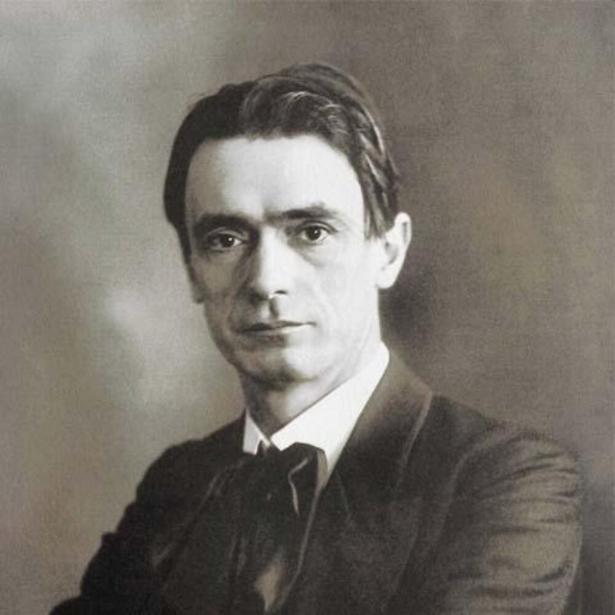
Rudolf Steiner
I should like to conclude with a further quotation from one of Owen Barfield’s lectures, which was given in 1982 to the Lindisfarne Association in America. This was a time when apostles of the so-called Alternative Society or Counter-Culture such as Theodore Roszak were concluding that the whole descent of Western humanity into individualism and materialism, prompted as it was to a large degree by an impulse emanating from Judaeo-Christianity, has been a tragic mistake and that the only path into the future lies through abandoning the intellectual exploration that gave rise to this descent and rediscovering the sources of Eastern wisdom. Barfield, who strongly embraced the central position that Rudolf Steiner ascribed to the Christ impulse and the “Mystery of Golgotha” for the whole cultural evolution of humanity, had by the time that he gave this lecture come to perceive some kind of a parallel between the contemporary phenomenon of a counter-culture (or nowadays even a post-modernist anti-culture or a world where “post-truth” reigns supreme) and what was from a certain point of view a similar situation in Greece and Rome prior to the coming of Christianity; and he also perceived a comparable parallel in two figures belonging respectively to that time and our own time:
The age of Alexandrian and Roman philosophy was the age of Eclecticism – of bits from one philosophy fitted in with bits from another like a sort of jigsaw puzzle. It was not without its merits, but it had no future and it must, I believe, have disappeared like water into sand if there had been no Aristotle: he was the conduit through which the old age passed on into the new, and he became the trunk of the whole wide-spreading tree. … I am not a prophet, but for what it is worth the dim vision I have when I peer into the future strongly suggests that the redemption of civilisation will depend in a very great degree on whether its intellectual structure comes to centre around the contribution of Rudolf Steiner to much the same extent as that of the Aristotelian age centred around Aristotle.[5]
[1] From the preface to the second edition of 1952.
[2] See the recently published compilation of Barfield’s essays on the evolution of human consciousness entitled The Riddle of the Sphinx, ed. Rory O’Connor, Barfield Press 2023, p. 64.
[3] Ibid., p. 67.
[4] Floris Books, 2004
[5] This lecture was published for the first time in The Riddle of the Sphinx. The quotations can be found on pages 133 to 135.